


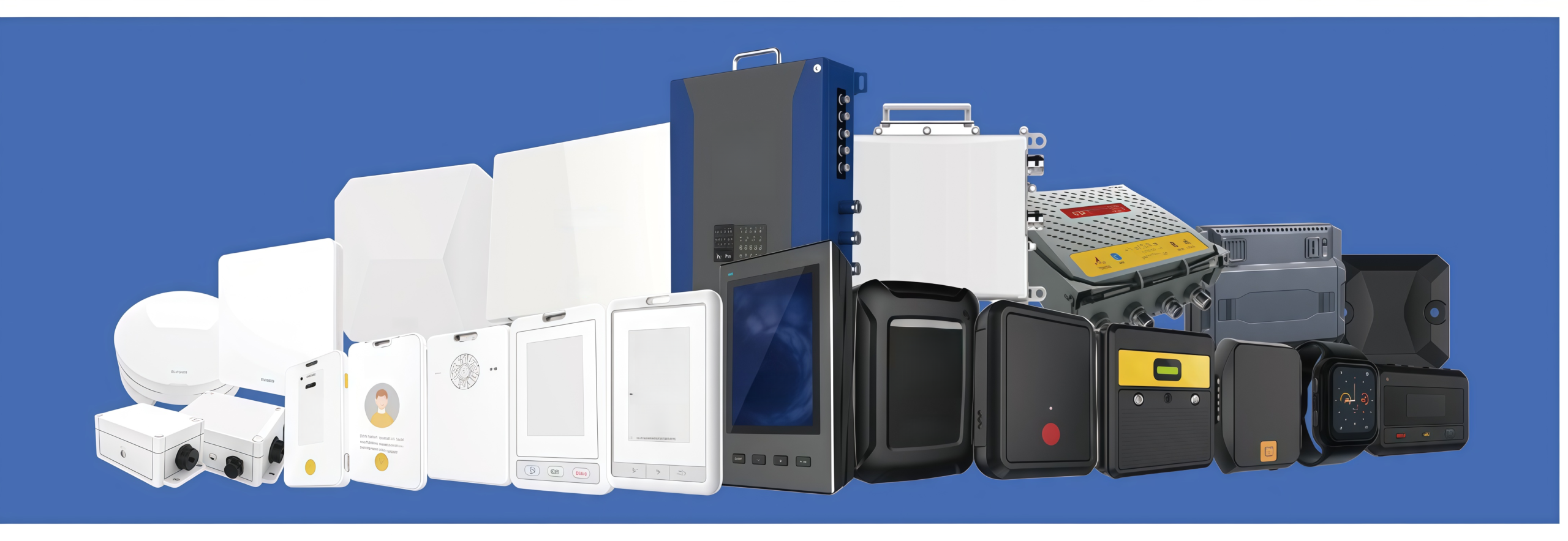
Questions About the Base Station
We provide two dedicated configuration tools for base station setup: the first is Network Configuration Assistant.exe, which is mainly used to configure the IP address and MQTT address of the base station; the second is Etrack, a professional tool for setting the detailed performance parameters of the base station.
In an unobstructed indoor environment, the effective line-of-sight positioning coverage distance of the base station for engineering applications is 30 meters.
Our products support two mainstream positioning technologies: TOF and TDOA. The TOF technology requires a minimum of 3 base stations to achieve 2D positioning, while the TDOA technology needs a minimum of 4 base stations for 2D positioning.
The static positioning error of both TOF and TDOA positioning technologies is controlled within the range of 0.1 to 0.3 meters.
Both the DW1000 and DW3000 chipsets are available in our product line. The DW1000 is the most mature solution with the longest application history and the widest industry adoption; the DW3000, as a new product, has unique performance advantages in specific application environments. There is no price difference between the two chipsets, and the specific model selected is generally based on real-time inventory status.
The maximum number of UWB tags that a single wired UWB base station can track simultaneously varies by positioning technology (at 1Hz working frequency):
TOF positioning mode: supports 100 tags
TDOA positioning mode: supports 700 tags
Data transmission between our base stations and tags is exclusively realized via Zigbee protocol, and Wi-Fi transmission is not supported for this data link. The base stations in our product line that support Wi-Fi communication are the D38 and D37 mining-specific base stations, which are designed to provide LAN access for other customer terminals with built-in Wi-Fi functions.
The installation height limit of the base station is determined according to the actual on-site environment and obstacle distribution. For standard indoor rooms, the recommended installation height is 2 to 3 meters, with the core principle of avoiding on-site obstacles to ensure unobstructed signal transmission.
Our base stations support both TDOA (Time Difference of Arrival) and TOF (Time of Flight) positioning technologies, and users can select the appropriate technology according to actual application needs.
High-precision clock synchronization between multiple base stations in the positioning system is realized through a dedicated wireless synchronization mechanism, ensuring consistent time reference for positioning data collection and calculation.
The average packet loss rate under this working condition is not a fixed value and is determined by the actual on-site environment and specific system configuration parameters. Our positioning system adopts Time Division Multiple Access (TDMA) as the core anti-collision mechanism, with a dedicated scheduling base station to manage the signal transmission time slots of all tags, effectively avoiding signal collision.
The degradation of positioning accuracy in a metal-dense environment is closely related to the actual on-site metal occlusion and signal reflection conditions, so there is no universal quantitative data for this scenario. Selecting products equipped with the DW3000 chipset can effectively mitigate the negative impact of metal-dense environments on positioning signals and improve positioning stability.
After the base station is installed, its physical coordinates need to be manually measured and input into the system for initial setup; all other performance parameters and working states do not require manual calibration, and the system will automatically complete the relevant parameter matching and adjustment.
Our base station firmware fully supports remote upgrade function, which can realize batch upgrade of multiple base stations through the background management system without on-site operation, reducing maintenance costs.
Our AoA (Angle of Arrival) positioning base stations are independently developed based on Bluetooth Low Energy (BLE) technology, optimized for small-area high-efficiency positioning scenarios.
Questions About the Tag
The actual battery life of the tag is affected by multiple factors, including the number of on-site base stations, enabled hardware functions and signal environment. The vibration reminder function of the tag consumes relatively high power, and the positioning power consumption is closely related to the number of base stations in the positioning environment. In typical customer application scenarios, the battery service cycle of the tag is 2 weeks to 1 month.
The data refresh frequency of the tag is fully user-adjustable, and users can set the appropriate working frequency through the background management system according to actual positioning accuracy and power consumption requirements.
Yes, the tag will real-time collect its own battery voltage and remaining power status, and upload the battery status data to the background server regularly, which can be viewed in real time through the management system.
The rechargeable battery used in the tag has a cycle life of 500 charge-discharge cycles, and the remaining battery capacity is not less than 80% after reaching the specified cycle times (capacity loss is less than 20%).
The tag adopts Pogo pin-4 magnetic charging as the main charging method with a standard charging voltage of 5V; in addition, it is also compatible with USB interface charging, providing flexible charging options for on-site use.
The text and character display on the tag support customized development for the different languages, and this customized service is provided on a paid basis according to specific customer requirements.
Yes, the tag is equipped with a built-in high-precision motion sensor, which can accurately detect its own static state and upload the static state data to the server in real time.
Although the static duration statistics function is not included in the standard system functions, all our tag hardware is equipped with a built-in high-precision accelerometer, which supports the detection of static duration after the device is removed and placed, and this function is fully available in our products.
The standard tag product does not support general fall detection function, but it is equipped with a dedicated high-altitude drop detection function, which can accurately detect and alarm the high-altitude drop accident of the wearer.
Questions About the Wristband
The battery life of the wristband is affected by multiple on-site factors, including the number of base stations, positioning method, positioning frequency and enabled hardware functions. Under typical application scenarios:
The screen-equipped model: with vital sign detection function enabled, the battery life is 2 to 3 days after a full charge;
The non-screen model: the battery life is about 1 to 2 weeks after a full charge.
Yes, the text and character display on the screen of the wristband fully supports optimization and adaptation for the different languages to meet the use requirements of different languages users.
Standard wristbands do not support inactivity or removal detection, and no such data is uploaded to the server. However, we provide anti-tamper wristbands for mandatory tracking scenarios like prisons and care facilities. which feature dedicated anti-removal detection functionality
The transmission frequency of vital sign data such as body temperature, heart rate and blood oxygen from the wristband to the server is fully configurable, and users can set the appropriate transmission interval through the background management system according to actual monitoring needs.
Yes, the wristband will real-time monitor its own battery remaining power and voltage status, and upload the battery status data to the background server regularly, which can be viewed in real time through the management system.
The standard tag product does not support general fall detection function, but all our tag hardware is equipped with a built-in high-precision accelerometer, which can accurately detect and alarm the high-altitude drop accident of the wearer.
Questions About the Software
Yes, our UWB positioning system needs to be used with the dedicated professional positioning management software developed by our company, which is fully compatible with all our hardware products and provides a complete set of positioning data collection, calculation, display and management functions.
The positioning management software fully supports Linux and Ubuntu operating systems, optimized for server-level stable operation and compatible with mainstream Linux-based distribution systems.
Yes, the system supports one-way data synchronization from the positioning software to the customer’s self-owned server, and all types of data including tag location data, vital sign health data, battery status, SOS emergency alarm status, static/inactivity data and other business data can be realized for data docking.
Yes, the positioning management software has a dedicated base station status monitoring module, which can display the real-time working status (online/offline) of all connected base stations in the system, and trigger an alarm for abnormal base station status in real time.
The data output frequency of the positioning management software is fully configurable by the user, and the default output frequency of the system is 1Hz, which can be adjusted according to the actual data application requirements.
Our positioning system supports two mainstream industrial communication protocols for data docking with the customer’s self-owned server: MQTT and WebSocket, both of which support stable and real-time transmission of mass positioning data and business data.
All functional settings and parameter configuration of the positioning management software are realized through a dedicated web-based operation interface, which supports remote access and operation, and is easy for system administrators to configure and maintain.
Yes, the positioning management software provides a complete set of open API interfaces, and all system settings and parameter configuration functions can be realized through API calls, supporting secondary development and automated system management by customers.
The positioning management software itself has no built-in upper limit on the number of connected base stations and tracked tags; the actual maximum number of tags that the system can track simultaneously is determined by the hardware performance of the deployed server (including CPU, memory, network bandwidth and other core indicators).
Yes, our positioning system fully supports centralized management of multiple independent positioning areas on a single server, and each positioning area can be configured with independent parameters and management permissions to realize unified monitoring and decentralized management.
The end-to-end transmission latency of tag location data from calculation completion to transmission to external systems via API is mainly determined by the actual on-site network communication quality, and the average latency under normal network conditions is about 0.5 second.
The core positioning engine of the system supports two deployment modes: local server deployment and cloud server deployment. Customers can select the appropriate deployment mode according to their own data security requirements, IT infrastructure and on-site application scenarios.
Yes, a license fee is charged for the positioning management software, and the company adopts a perpetual license pricing model (one-time purchase for permanent use). The specific license fee is determined according to the customer’s actual project scale and functional requirements.
Technical Support
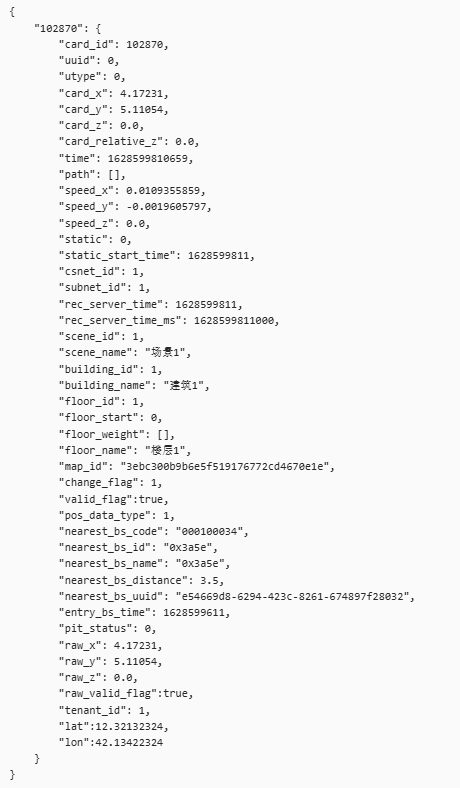
Our requirement is that the calculated data (for example, tag ID and position as x,y) be transmitted to our own server using a defined protocol. Similarly, health, battery, and other data should also be transmitted. We handle visualization with our own software. Is this possible?
This requirement is fully achievable. Our positioning system supports customized development of data transmission protocols, which can transmit the calculated tag positioning data, health data, battery status and other types of business data to your self-owned server according to the specified protocol, and is compatible with your self-developed software for data visualization and secondary processing.
Can you dispatch relevant technical personnel to provide on-site technical support?
Yes, we can dispatch professional technical personnel to the site according to the complexity of the project, and the relevant service fees will be evaluated based on the actual project situation. Generally, our on-site technical support fees are charged on a per-person basis.
Warranty and Support
Is there a warranty for the products? If yes, how many years? If any issue occurs, can we receive technical support? Under what terms and conditions?
All our UWB positioning products are provided with a one-year official warranty period from the date of delivery. During the warranty period, we provide free technical consulting services for all products; for defective products caused by non-human factors, we support free repair or replacement after the products are returned to our company. Beyond the warranty period, we provide lifetime free technical consulting services for all customers, and the repair of faulty products is provided on a paid basis according to the actual fault situation. Considering the high cost of international logistics, we recommend that customers purchase spare parts at a ratio of 5% of the total order quantity; faulty products can be returned to our company in batches for unified repair or replacement, which can effectively reduce the logistics cost and improve the maintenance efficiency.